

The Foundations of My Work
What holds us together when life pulls us apart •
What holds us together when life pulls us apart •


One question
Why do some people and teams hold together under pressure, while others fall apart?
That question has followed me through more than thirty years in education and leadership, and all the way up Mount Everest. It sits underneath everything I do, from the keynotes I give to the coaching conversations I have.
It's led me to develop two connected areas of work. At the centre is Human Structural Integrity, which explores what keeps people and teams standing under pressure. Alongside it is the Identity Realignment Cycle™, a model that explores how we find our footing again when change unsettles our sense of who we are.
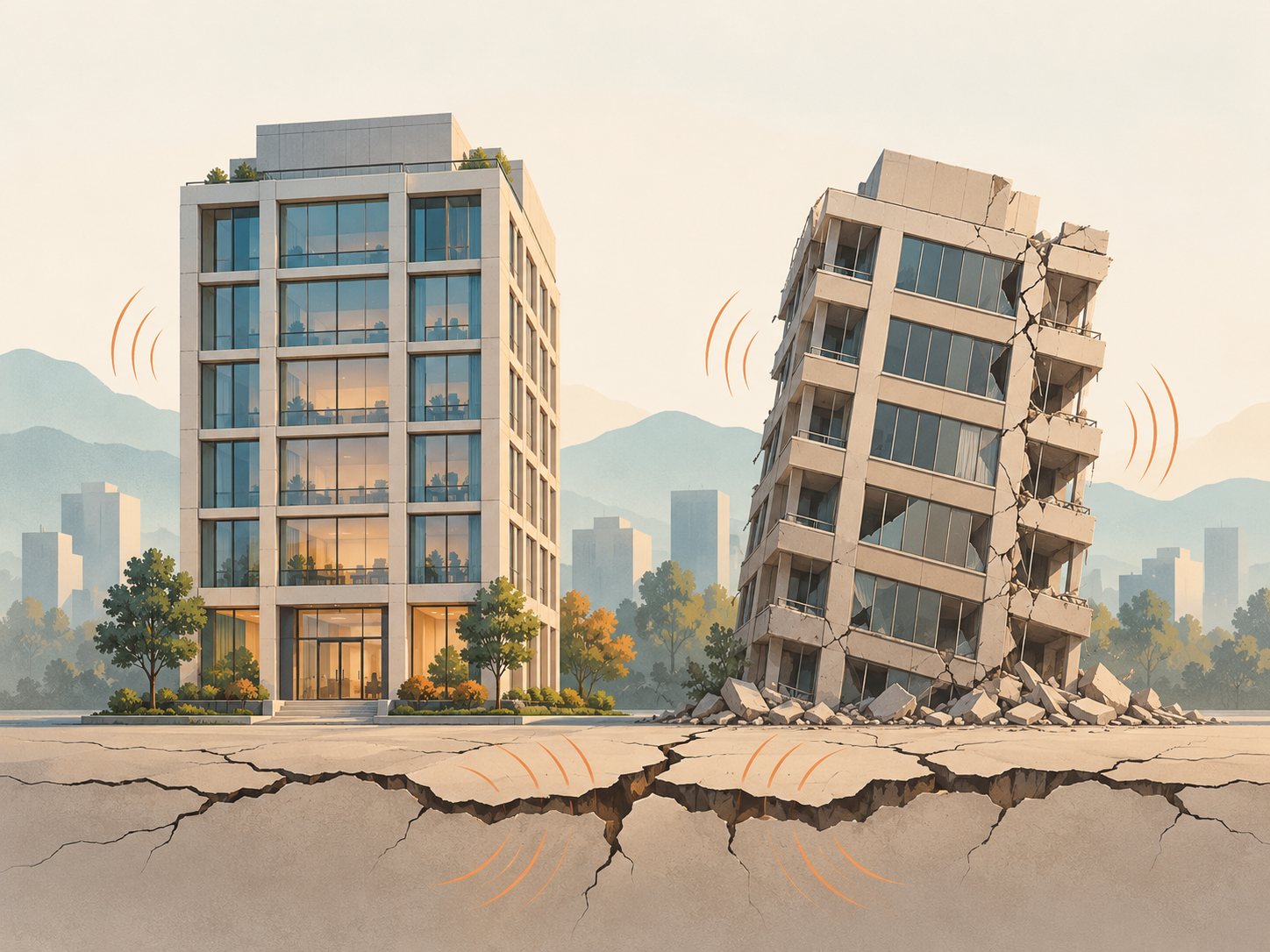
Same pressure. Different outcome.
When an earthquake hits, two buildings can face the same force. One stays standing. The other collapses.
The difference isn't simply the earthquake. It's how each building was designed, how the load is distributed and whether the structure can flex without failing.
People and teams aren't so different. Pressure and change will always come. What matters is the structure they meet, both within us and between us.
Structures don't fail simply because forces exist. They fail when those forces exceed their capacity to withstand them. And that capacity is something we can deliberately build.
Human Structural Integrity
Human Structural Integrity describes what holds people and teams together under pressure. It includes the foundations within us, the relationships between us and the structures that support how we live and work.
Like a building's foundations and framing, much of it remains invisible until it's tested.
It's a different way of thinking about resilience. Instead of simply asking people to toughen up, it asks what we can deliberately strengthen so that people and teams can hold firm without becoming rigid.
Three connected models help us understand what makes human structures vulnerable, how we build them and what keeps them strong.
We don't have to wait for something to break before we build strength.
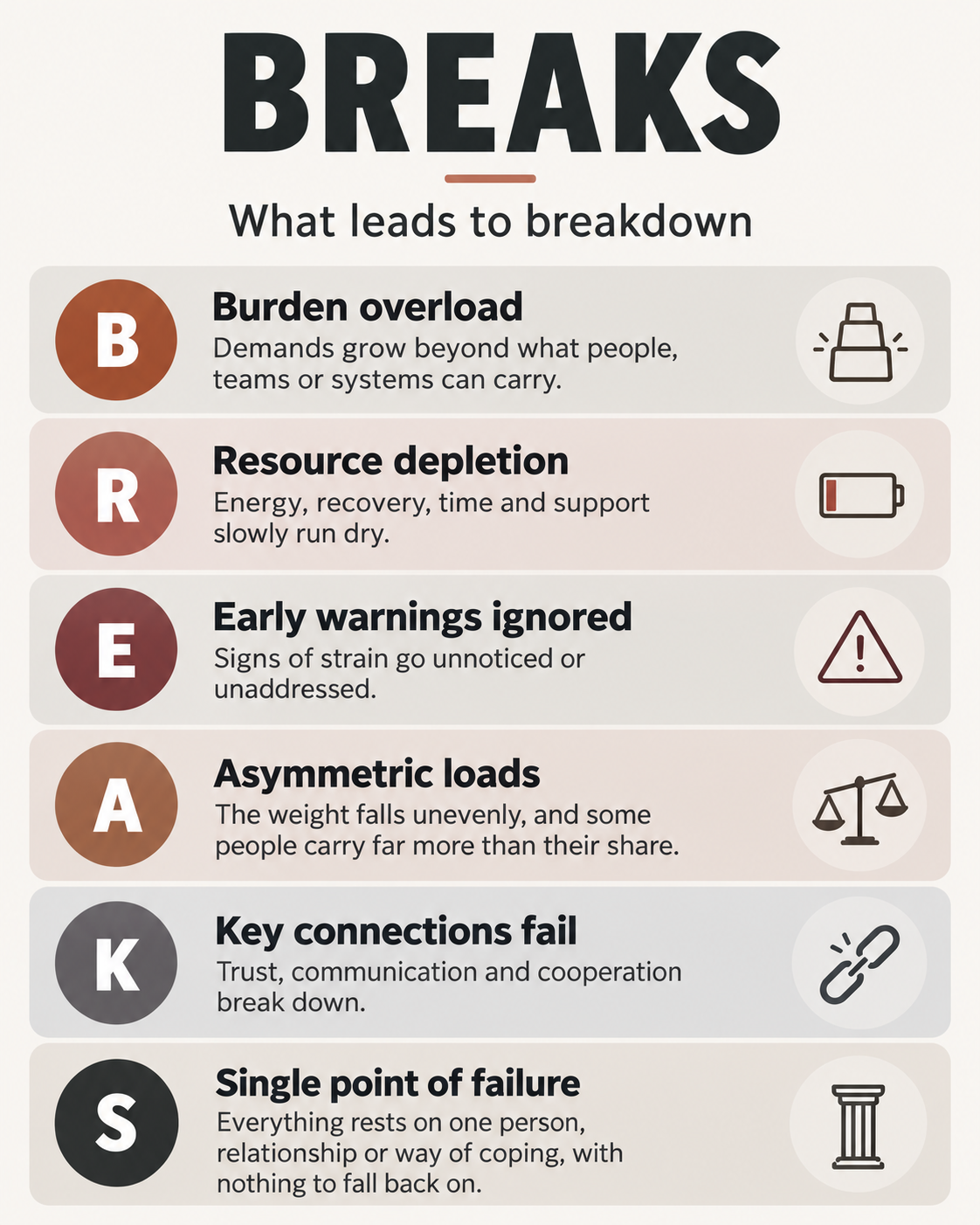
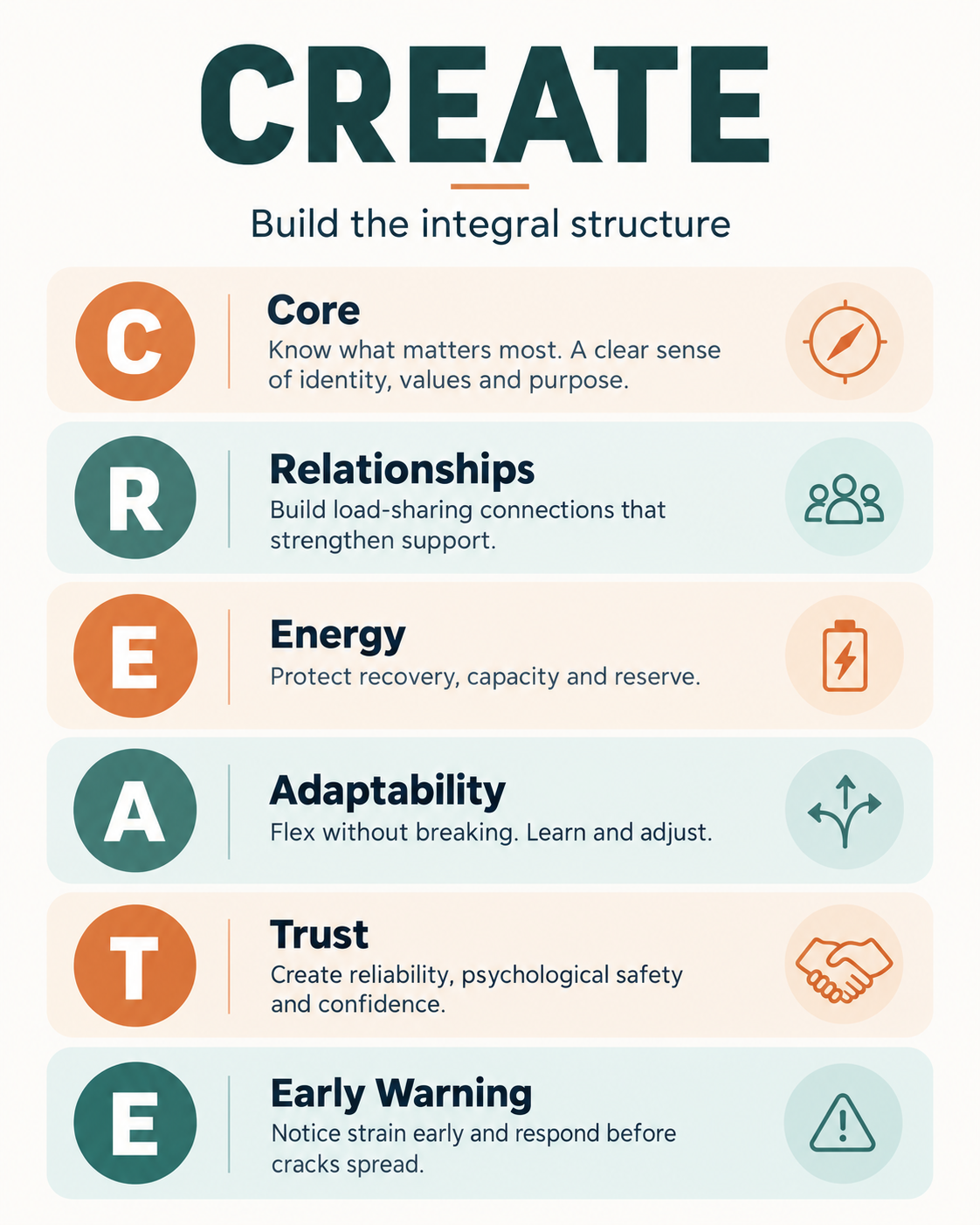
BREAKS identifies vulnerabilities. CREATE builds the structure. COHERENCE maintains and repairs it.
BREAKS: How human structures weaken
Structures rarely collapse all at once. They weaken over time, often in ways that are easy to miss. BREAKS identifies six conditions that can put people and teams at risk.
B — Burden overload. Demands grow beyond what people or teams can carry.
R — Resource depletion. Energy and support slowly run dry.
E — Early warnings ignored. Signs of strain go unnoticed or unaddressed.
A — Asymmetric loads. The weight falls unevenly, and some people carry far more than their share.
K — Key connections fail. Trust and communication start to break down.
S — Single point of failure. Everything rests on one person or one way of coping, with nothing to fall back on.
BREAKS helps us recognise where the vulnerabilities lie, often before the consequences become visible.
CREATE: What we can build
If we understand what makes structures vulnerable, we can be more intentional about building what supports them.
CREATE describes six essential elements of Human Structural Integrity.
C — Core. A strong foundation in who we are and what matters to us.
R — Relationships. Connections that allow us to share the load rather than carry everything alone.
E — Energy. The physical and emotional reserves we need to function well and recover.
A — Adaptability. The capacity to flex and adjust as circumstances change.
T — Trust. Confidence built through experience and the demonstrated reliability of the people and supports we depend on.
E — Early Warning. The ability to recognise emerging strain before it develops into something more serious.
These elements work together. Just as a building's strength depends on more than its foundations, Human Structural Integrity depends on how its different parts support one another.
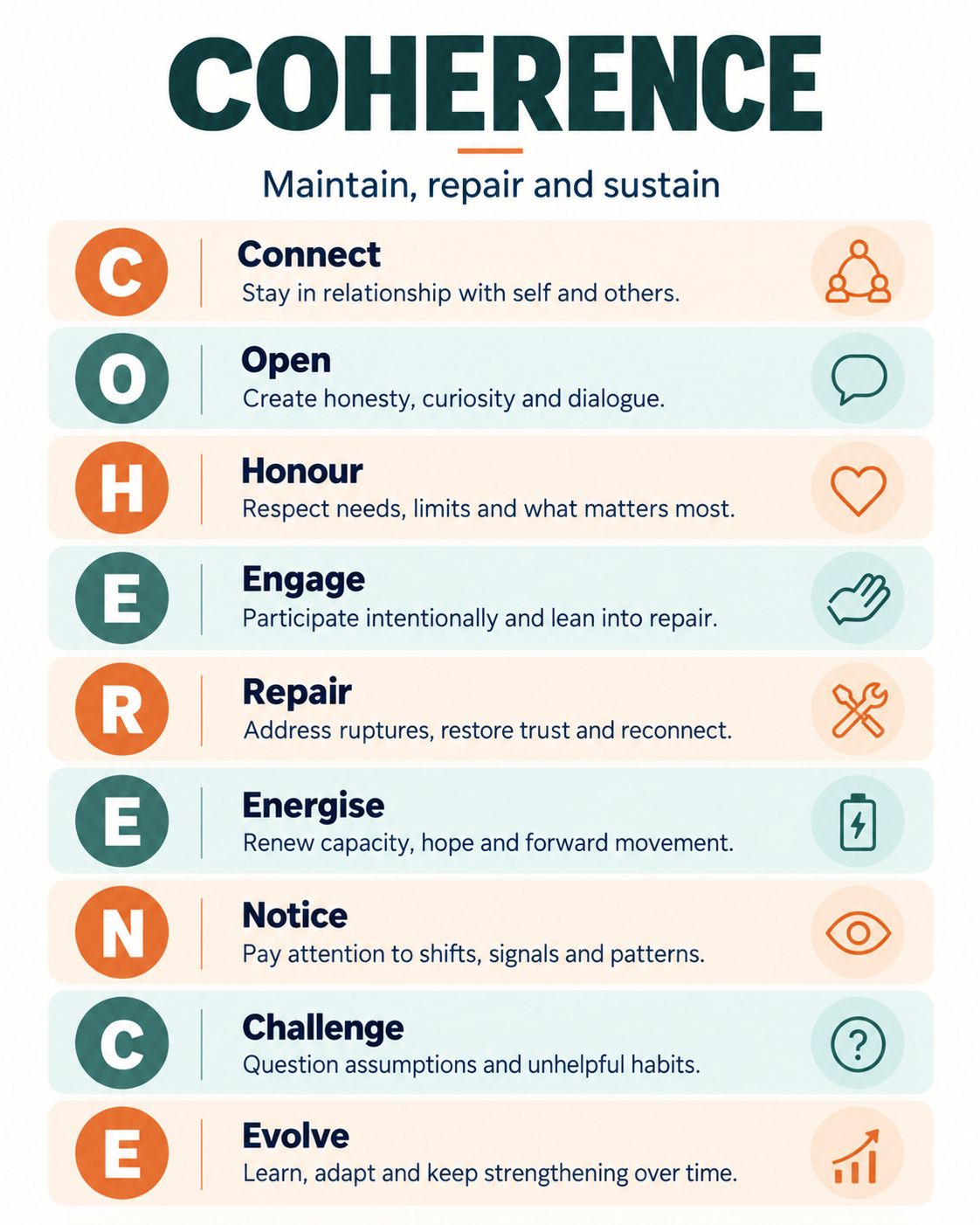
COHERENCE: How we keep it standing
Even the strongest structures need ongoing care.
COHERENCE explores the everyday practices that help us maintain what we've built, respond to emerging strain and repair what has been damaged.
Connect · Open · Honour · Engage · Re-story · Energise · Notice the good · Challenge · Evolve
These practices help us remain responsive as our circumstances change, without losing the foundations that support us.
Importantly, we don't have to wait for something to break before using CREATE and COHERENCE.
We can deliberately build and maintain Human Structural Integrity, reducing the vulnerabilities identified by BREAKS before they lead to breakdown.
That's the shift at the heart of this work: from expecting people to continually become more resilient, to strengthening the human structures that make resilience possible.

The Identity Realignment Cycle™
When life changes, who are we becoming?
Some changes are chosen. Others arrive without warning.
A role ends or a plan falls over, and the practical circumstances shift quickly. Our sense of who we are often takes much longer to catch up.
The Identity Realignment Cycle™ explores what happens when change disrupts our sense of self, and how we begin finding our way forward.
It describes five interconnected phases.
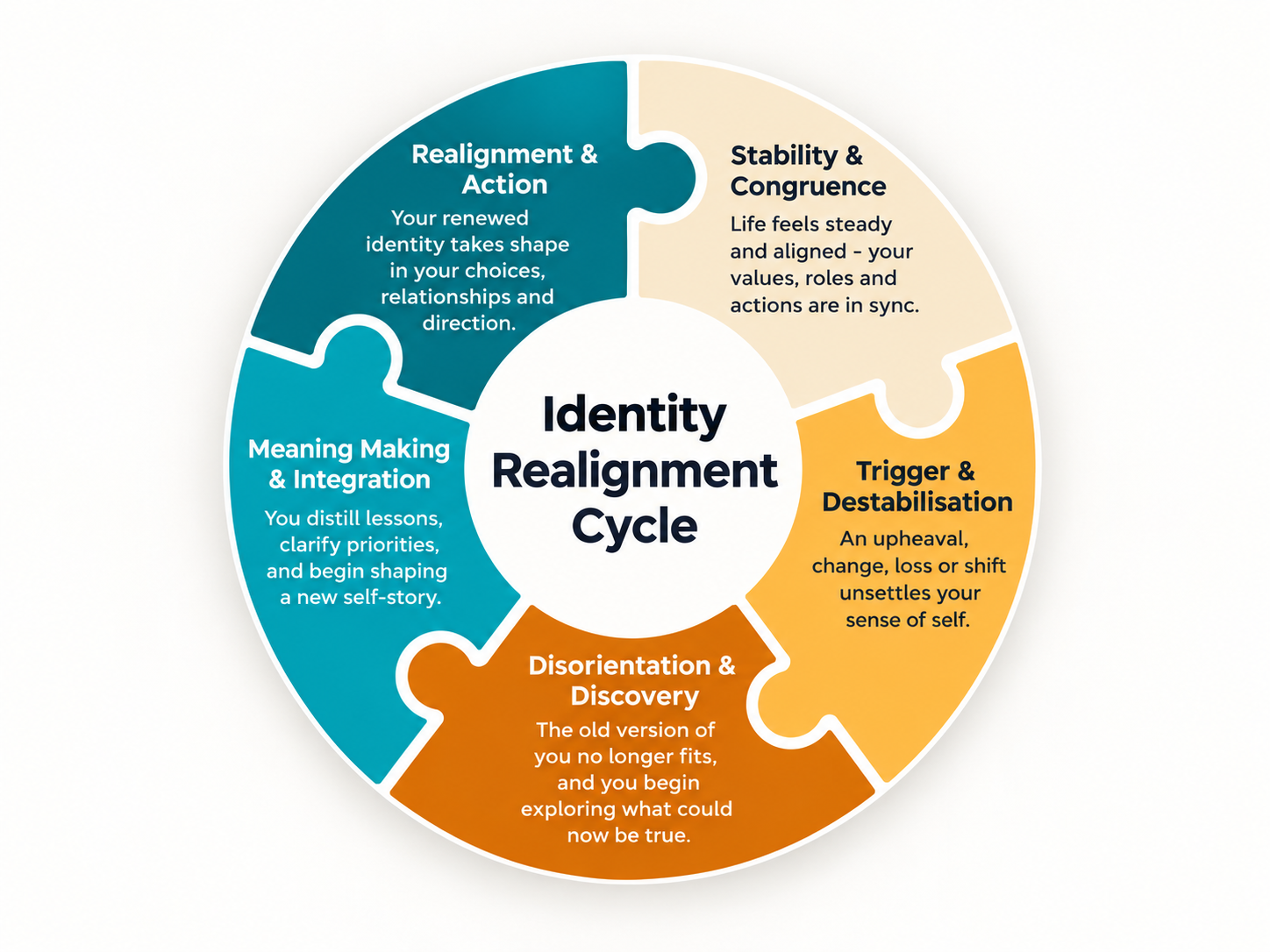
The Five Phases of the Identity Realignment Cycle™
1. Stability & Congruence
When life feels aligned
Our values and actions fit comfortably with the life we're living. We have a relatively steady sense of who we are and where we belong.
2. Trigger & Destabilisation
When something changes
An event or change in circumstances unsettles what once felt certain. Familiar assumptions are challenged, and the story we've built about ourselves may no longer fit.
3. Disorientation & Discovery
When the familiar no longer fits
The old story begins to shift, and difficult questions arise. Who am I now? What matters most? Uncomfortable as it can be, this is also where new possibilities begin to emerge.
4. Meaning-Making & Integration
Making sense of what has happened
We begin interpreting our experiences differently and incorporating what has changed into our evolving understanding of ourselves. New meaning can help us find direction again.
5. Realignment & Action
Finding a way forward
We begin making choices that reflect our developing sense of identity, taking meaningful steps towards a way of living or working that feels right for who we're becoming.
Understanding the Cycle
These phases aren't necessarily linear. We may move between them or revisit earlier phases as life continues to change.
Understanding the cycle helps us recognise what we're experiencing, why we may feel stuck and what could support our next steps.
For leaders, it also offers insight into why organisational change can affect people so deeply. Responsibilities may change overnight, but someone's sense of identity and belonging often needs much longer to adjust.

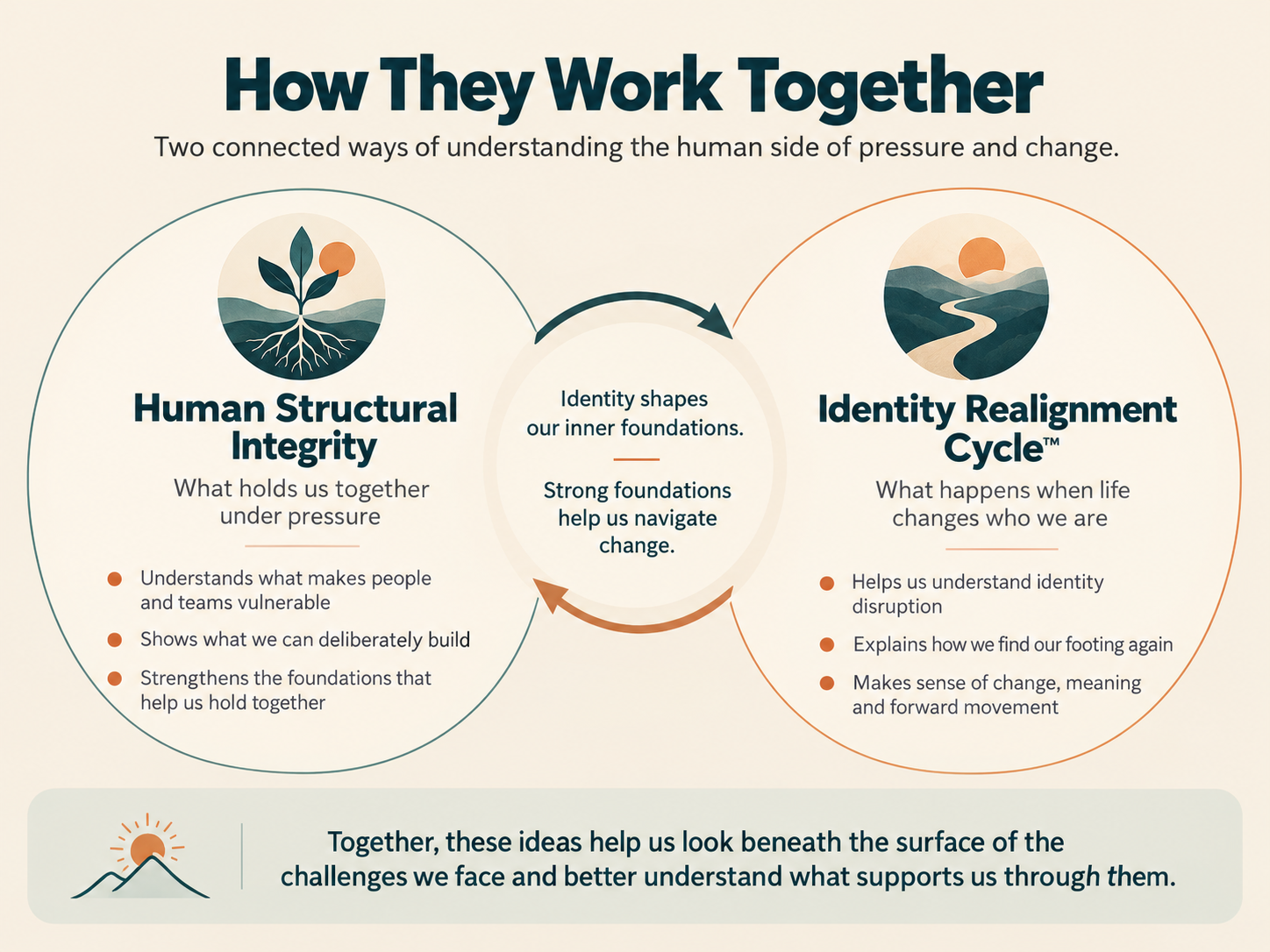
How They Work Together
Human Structural Integrity and the Identity Realignment Cycle explore different aspects of our experience.
Human Structural Integrity helps us understand what holds us together under pressure and what we can deliberately build to strengthen that capacity.
The Identity Realignment Cycle™ helps us understand what happens to our sense of self when circumstances change, and how we find our footing again.
Our identity influences our inner foundations, while the strength of those foundations and our relationships can affect how we experience change.
Together, these ideas help us look beneath the surface of the challenges we face and better understand what supports us through them.

Built on Experience and Evidence
These ideas didn't come from theory alone.
They grew out of decades of leading schools and guiding people through challenging environments, alongside my own experiences of living with multiple sclerosis and climbing Everest, including the times my own structures didn't hold.
They also draw on research and professional practice in positive psychology and narrative approaches, informed by my postgraduate study in leadership and education.
I've spent much of my life exploring these questions, sometimes through formal study, sometimes through working with people and sometimes through experiences I never could have anticipated.
My aim is to make the ideas genuinely useful, so they don't remain interesting theories but become something people can apply to the challenges they face every day.

Putting It Into Practice
Whether you'd like to explore these ideas within your organisation or discover what they might mean for you personally, there are several ways we can work together.
Through keynotes, workshops and professional or personal coaching, I help people take these ideas beyond understanding and into practical application.
